
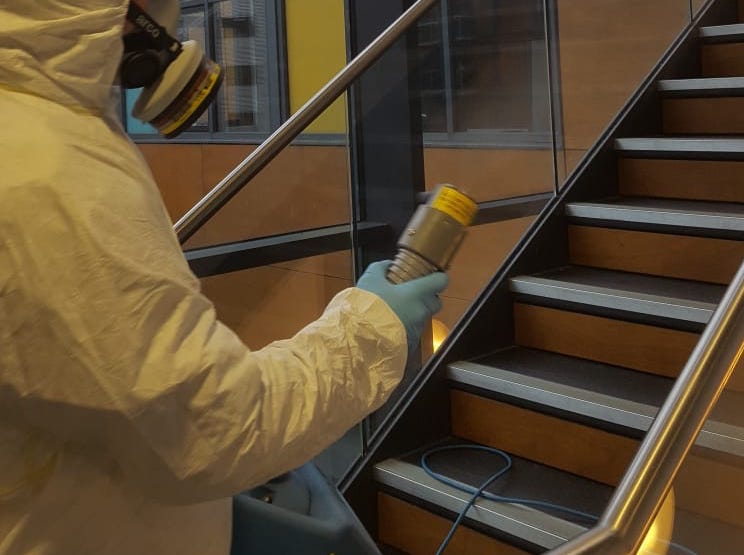
Preventing COVID is typically as simple as proper handwashing and disinfection. However, it is not that easy if the enemy is invisible and contagious. This is why the key to keep your home free from the virus is the frequent disinfection of your surroundings, and it should be more applied to common areas and surfaces where many people come into contact.
As experts are busy studying COVID and trying their best to eliminate it, we are given some precautions to avoid it. Initially, we disinfect surfaces with a combination of water and bleach. There are also products on the market that have robust solutions claiming to kill the virus. And now, we are introduced to fogging as a more effective way of sanitising.
What is fogging?
Fogging is the application of chemical disinfectants in the form of very fine mist or fog to decontaminate the whole place, even the corners that cannot be reached during manual cleaning. It is known to be more thorough because the mist covers the surfaces, leaving no area unsanitised. It will also penetrate sofas, curtains, carpets, and other soft furnishings.
Is fogging safe?
Rest assured that commercial COVID fogging uses environmentally friendly disinfectants for fogging. And while establishments differ in exposure and risks, the strength of disinfectants can be adjusted according to the client’s needs and requirements.
You also have nothing to worry about the mist getting into your devices and appliances, as the fog won’t affect their functions and will not destroy the quality of your furniture. Some are also vegan and Halal compliant.
How long does fogging take?
Generally, the fogging procedure won’t interrupt too much of your operations. For example, if you have a small home or business space, it would only take several minutes. In comparison, it might take a few hours for more prominent areas, such as buildings, apartments, or condominiums.
The good thing is you won’t need to wait for it to dry or take effect. As long as the fog touches the surfaces, it won’t spend much time killing viruses and bacteria. As a result, you can go back to your operations in at least less than an hour after the fogging.
How often should it be done?
Fogging is a form of deep cleaning that is not required to be done every day. As for the frequency, it ultimately depends on the number of staff and customers coming in and out of the establishments. For residential areas, on the other hand, it can be done less frequently. It can be on a monthly interval or when a new case or suspected case has occurred.
What makes fogging a better disinfectant?
Fogging will do a better job in providing maximum protection at home or in the office. When you disinfect, you usually clean hard and less porous surfaces. For example, you don’t wash your linens and curtains every day. It will also hurt your computers and printers if you wipe them with a damp cloth.
Fogging will do in-depth decontamination on the narrowest corners, softest materials, and areas that are skipped by error.
Conclusion
In the battle against the pandemic, there is no time to be complacent, which is why it won’t hurt to take all precautions possible to secure your company’s staff or your family. Ultimately, fogging will give your employees and loved ones a chance to have maximum safety against the invisible virus.
Are you looking for a COVID fogging in Doncaster? Trust Arnies Pest Management! We offer a wide range of fogging services around the United Kingdom, from pest control to COVID prevention, so you can be worry-free in your environment. Get in touch with us today to book our services!
Recent Comments